SDLT Mixed Use Rate: How the Classification Cuts Stamp Duty and When You Can Claim the Difference Back
24 Oct 2026 · Unlocked · 13 min read
A £1,500,000 purchase with any non-residential element costs £64,500 in Stamp Duty Land Tax at the SDLT mixed use rate, against £93,750 on the residential table and £168,750 once the 5% additional-dwelling surcharge is added (GOV.UK SDLT rate pages, checked 24 October 2026). When a mixed-use purchase was filed at residential rates, the gap is an SDLT refund overpayment that HMRC repays if the claim is made in time. Whether the money comes back depends on the classification test, the arithmetic of how to calculate SDLT refund amounts on the two tables, and a 12-month and a four-year deadline.
What Is a Mixed-Use Property for SDLT?
Mixed use property SDLT treatment rests on one statutory test. Section 55(1B) of the Finance Act 2003 applies the residential table only where the relevant land "consists entirely of residential property", and the non-residential table where it "consists of or includes land that is not residential property" (legislation.gov.uk, checked 24 October 2026). The tax is not apportioned, so a small non-residential element moves the whole price onto the lower table.
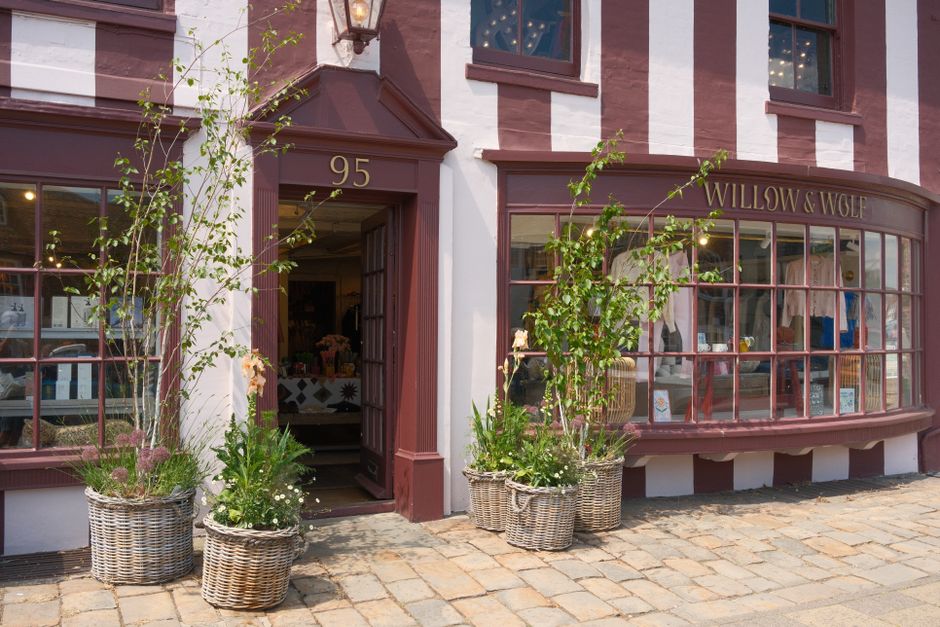
GOV.UK describes a mixed property as one with both residential and non-residential elements, "for example a flat connected to a shop, doctor's surgery or office" (Rates for non-residential and mixed land and property, checked 24 October 2026). The same page lists as non-residential:
- commercial property, such as shops or offices;
- forests;
- agricultural land that is part of a working farm or used for agricultural reasons;
- any other land or property that is not part of a dwelling's garden or grounds;
- six or more residential properties bought in a single transaction.
SDLT Mixed Use Rates: What You Pay on the Non-Residential Tables
The SDLT mixed use rate is the non-residential table: 0% on the first £150,000, 2% on the next £100,000 and 5% on the portion above £250,000 (GOV.UK, checked 24 October 2026). The residential table starts charging at £125,000 and rises to 12% above £1.5 million, and a buyer who will own more than one dwelling usually pays 5% on top of every band (GOV.UK Residential property rates, checked 24 October 2026).
| Portion of the price | Non-residential and mixed use | Residential | Residential with 5% surcharge |
|---|---|---|---|
| Up to £125,000 | 0% | 0% | 5% |
| £125,001 to £150,000 | 0% | 2% | 7% |
| £150,001 to £250,000 | 2% | 2% | 7% |
| £250,001 to £925,000 | 5% | 5% | 10% |
| £925,001 to £1.5 million | 5% | 10% | 15% |
| Above £1.5 million | 5% | 12% | 17% |
Worked Example: £1.5m at Residential vs Mixed-Use Rates
Take a £1,500,000 purchase of a shop with flats above, worked on each table from the GOV.UK rates checked on 24 October 2026. The same steps show how to calculate SDLT refund amounts for any return filed on the wrong table.
On the non-residential table, which applies to a mixed-use purchase:
- 0% on the first £150,000 = £0
- 2% on the next £100,000 = £2,000
- 5% on the remaining £1,250,000 = £62,500
- Total SDLT = £64,500
On the residential table:
- 0% on the first £125,000 = £0
- 2% on the next £125,000 = £2,500
- 5% on the next £675,000 = £33,750
- 10% on the final £575,000 = £57,500
- Total SDLT = £93,750
With the 5% surcharge, add 5% × £1,500,000 = £75,000, giving £93,750 + £75,000 = £168,750.
A buyer who filed on the residential table overpaid £93,750 less £64,500 = £29,250. One who also paid the surcharge overpaid £168,750 less £64,500 = £104,250. HMRC's SDLT calculator at tax.service.gov.uk produces both figures for a given price and date.
How a Mixed-Use Classification Turns Into an Overpayment
An SDLT refund overpayment arises when the return was filed on the residential table for a purchase that included a non-residential element. GOV.UK's refund page names this case directly: a buyer who "paid the residential property rates of SDLT but you should have paid the non-residential rates" (Refunds of Stamp Duty Land Tax, checked 24 October 2026). A solicitor or conveyancer usually files that return on the day of completion (GOV.UK Stamp Duty Land Tax overview, checked 24 October 2026), and the worked example above shows how to calculate SDLT refund figures once the error is found.
Multiple dwellings relief was abolished for transactions that complete, or are substantially performed, on or after 1 June 2024, and a purchase of six or more dwellings in one transaction is now treated as non-residential under section 116(7) (HMRC SDLTM29901, checked 24 October 2026). How the tax is worked out when several dwellings are bought together is covered in SDLT on Buying Multiple Dwellings in One Transaction: What to Check.
The 5% Higher-Rate Surcharge Does Not Apply
HMRC's guidance says the higher rates do not apply where the property "is a mixture of residential and non-residential (like a shop with a flat above it)" (GOV.UK Higher rates of Stamp Duty Land Tax, last updated 1 April 2025, checked 24 October 2026). An SDLT refund higher rate claim on a mixed-use purchase therefore recovers two amounts: the gap between the residential and non-residential tables, and the surcharge on the whole price. In the £1.5 million example, the surcharge is £75,000 of the £104,250 overpayment.
When Land Counts as Garden or Grounds, and When It Does Not
Land bought with a house is residential when it is the "garden or grounds" of the dwelling (section 116(1)(b) Finance Act 2003). HMRC's manual says there is no statutory size limit and no statutory concept of "reasonable enjoyment" for SDLT, so the size of the land does not decide the question on its own (SDLTM00440, checked 24 October 2026).
HMRC treats use as potentially the most significant indicator. SDLTM00460 calls commercial use "a strong indicator" that land is not garden or grounds, provided it was "actively and substantively exploited on a regular basis", and says HMRC would expect evidence of that use (checked 24 October 2026). The manual gives these examples:
- Paddocks and orchards are usually residential unless commercially exploited.
- Parkland grazed under a genuine commercial arrangement is far less likely to be garden or grounds than parkland grazed only as a setting for the house.
- A lease to a third party for exclusive occupation may indicate non-residential use; occasional use by others does not.
- Arable land lying fallow does not become garden or grounds.
Two Tribunal Cases That Draw the Boundary
Two SDLT mixed use cases from the First-tier Tribunal show how small, or how unusual, the non-residential element can be.
In Sehgal v HMRC [2025] UKFTT 1439 (TC), the buyers paid a single premium of £18,250,000 for a Grosvenor Square apartment, a parking space and a basement storage unit under one agreement, completing on 4 March 2022. The storage unit, less than two metres wide and less than four metres deep, came on its own new 20-year lease. HMRC had refused a refund of £1,749,250; the tribunal held the storage lease was not residential property and allowed the appeal (judgment dated 24 November 2025).
In Guerlain-Desai v HMRC [2024] UKFTT 515 (TC), the buyer paid £3,160,000 for a house in 16.6 acres, including about 12 acres of mature woodland, and paid £372,750 at the residential additional-property rates. The tribunal found that the woods, crossed by public footpaths and used by residents of the surrounding estate, were not garden or grounds, and allowed her claim to a refund of £225,250 (released 14 June 2024). The figure matches the table: £2,000 + 5% × £2,910,000 = £147,500 at non-residential rates, and £372,750 less £147,500 = £225,250.
When HMRC Will Refund You: The Conditions
The SDLT refund rules on GOV.UK list the cases where a refund may be due, including these four (Refunds of Stamp Duty Land Tax, checked 24 October 2026):
- residential rates were paid where the non-residential rates should have been;
- a relief or exemption was not claimed on the original return;
- a mistake in calculating the tax on the original return caused an overpayment;
- the correct tax was calculated but too much was paid to HMRC in error.
Every purchaser must be on the claim, and a buyer who uses an agent stays responsible for it: if HMRC later finds the claim wrong, the refund is repaid in full with interest and a penalty may be charged (GOV.UK, checked 24 October 2026). Reviewing the original return comes first, as set out in Did Your Conveyancer Overpay Your Stamp Duty? How to Check. A calculator figure at non-residential rates proves only the arithmetic; whether HMRC accepts the classification turns on the evidence for the non-residential element.
The Deadlines: 12 Months to Amend, 4 Years to Claim
The SDLT refund time limit depends on the route:
| Step | Deadline | Source |
|---|---|---|
| File the return and pay | 14 days after completion | GOV.UK Stamp Duty Land Tax overview |
| Amend the return | 12 months after the filing date | Finance Act 2003 Sch 10 para 6(3) |
| Claim for overpaid tax | 4 years after the effective date of the transaction | Finance Act 2003 Sch 10 para 34B(1) |
Amending the return is the faster route, and an amendment that produces a repayment must be sent with the contract and any transfer instrument (Sch 10 para 6(2A), legislation.gov.uk, checked 24 October 2026); the full process is in How to Reclaim Overpaid Stamp Duty Land Tax From HMRC. After 12 months, an SDLT refund overpayment can only be recovered by a paragraph 34 claim within the four years. Other taxes carry different windows, set out in How Far Back Can a Business Claim Money It Has Overpaid?
How Long HMRC Takes to Pay
On how long to get SDLT refund money, GOV.UK says HMRC usually pays it directly into the claimant's bank account within 15 working days of receiving the claim, and may write by post if it needs more information (checked 24 October 2026). A contested claim takes longer: in Guerlain-Desai the return was amended on 1 April 2021, HMRC opened an enquiry on 13 December 2021, and the tribunal decided the appeal in June 2024.
Buying Through a Company: The Same Rules Apply
SDLT for company buying mixed use property follows the same section 55 test and the same non-residential table as a personal purchase. The difference sits on the residential side: a company pays the higher rates on any residential property of £40,000 or more, whether or not it owns another (GOV.UK Higher rates of Stamp Duty Land Tax, checked 24 October 2026). Certain corporate bodies also pay 17% on residential property costing more than £500,000 unless a relief applies, such as use in a property rental business (GOV.UK Stamp Duty Land Tax: corporate bodies, checked 24 October 2026). A company that buys a commercial building should also settle its fixtures position, covered in Capital Allowances When Buying a Commercial Property: What to Agree Before Completion.
Frequently Asked Questions
Conclusion and Company Eligibility Check
An SDLT refund on a mixed-use purchase is one route to what your business is owed, and the four-year window runs separately from the effective date of each purchase. Run the company eligibility check to see which refund and relief routes apply to the company before the oldest purchase passes four years.